
IT outsourcing for small business is typically the most cost-effective solution for companies with 10 to 50 employees who need 24/7 support and predictable technology costs. Organizations should hand off specialized technical maintenance and security to external experts to avoid unexpected repair bills, while retaining control over internal strategic goals. This framework allows growing companies to access enterprise-level tools and scalability without the high overhead of a full-time in-house IT department.
Small business owners often find themselves stretched thin, managing technology that should enable growth but instead feels like a constant operational bottleneck. The relentless cycle of troubleshooting hardware, securing networks, and vetting new software distracts leadership from core revenue generating activities. This accumulation of technical debt creates a hard ceiling for scalability. Strategic IT management is no longer a luxury reserved for large corporations; it is a fundamental requirement for any small firm looking to compete in an increasingly digital market. In this guide, Allivhu provides a neutral framework to help you navigate the complexities of managed services. You will learn how to distinguish between tactical tasks and strategic assets, benchmark your budget against industry standards, and determine the precise moment to transition from internal hiring to an external partner. We also examine how AI and modern SaaS are reshaping these traditional outsourcing decisions.
The Small Business IT Dilemma: Balancing Operational Speed with Budget Constraints
Small business owners often face a difficult trade-off between the need for enterprise-level efficiency and the constraints of a tight operational budget. To scale effectively, you need strategic planning and digital tools that allow your team to move quickly and securely. However, the cost of recruiting and retaining a full-time IT department is often prohibitive for organizations in the $1M to $5M revenue range.
This creates the core challenge of IT outsourcing for small business. True outsourcing is not merely hiring a technician to troubleshoot hardware; it is a strategic decision to purchase specialized expertise as a service rather than building it in-house. Historically, many firms used a "break-fix" model, paying for help only when systems failed. This reactive approach is inherently risky because it ties IT costs to business downtime and technical failure.
Modern managed services flip this incentive. At Allivhu, based in Duchesne, UT, we provide technology driven business solutions that prioritize operational modernization over reactive repairs. We help clients optimize your modern operations by building resilient workflows and integrated systems. This shift allows leadership to focus on high-level architecture while the technical infrastructure of the business remains secure, scalable, and predictable.
The Strategic vs Tactical Framework: Identifying What to Outsource

Deciding what to hand over to an external partner requires more than a list of current technical frustrations. It requires a clear framework that separates tactical maintenance from strategic advantage. For a growing firm, the goal is not to eliminate your involvement in technology, but to offload the "plumbing" so your leadership can focus on the "architecture."
We utilize a decision matrix to categorize tasks based on two factors: their contribution to your unique competitive advantage and the complexity of their daily upkeep. Use the table below to evaluate where your current IT needs fall:
Task Category | Strategic Impact | Maintenance Load | Recommended Path |
|---|---|---|---|
Tactical (Plumbing) | Low | High | Outsource to Partner |
Operational (Standard) | Low | Low | Automate or Outsource |
Strategic (Architecture) | High | Medium | Retain Internal Control |
Innovation (Core) | High | High | Retain / Co-manage |
Tactical tasks include help desk support, patch management, and routine data backups. These are high-frequency, essential functions that do not differentiate your business from a competitor. Outsourcing these ensures that your systems remain stable without draining your executive focus on repetitive troubleshooting.
In contrast, strategic tasks such as proprietary data strategy, long-term product roadmapping, and the selection of strategic planning and digital tools should remain under your direct control. Many generalist providers suggest outsourcing the entirety of your IT department to save on overhead, but this often leads to a generic infrastructure that lacks the flexibility required for technology driven business solutions. For firms in the $1M to $5M revenue range, keeping the "architecture" internal ensures that your digital foundation evolves in lockstep with your specific market goals. The outsourced partner manages the reliable flow of data underneath, while you maintain the vision of how that data creates value.
The Cost of Managed IT Services: Benchmarking Your Budget
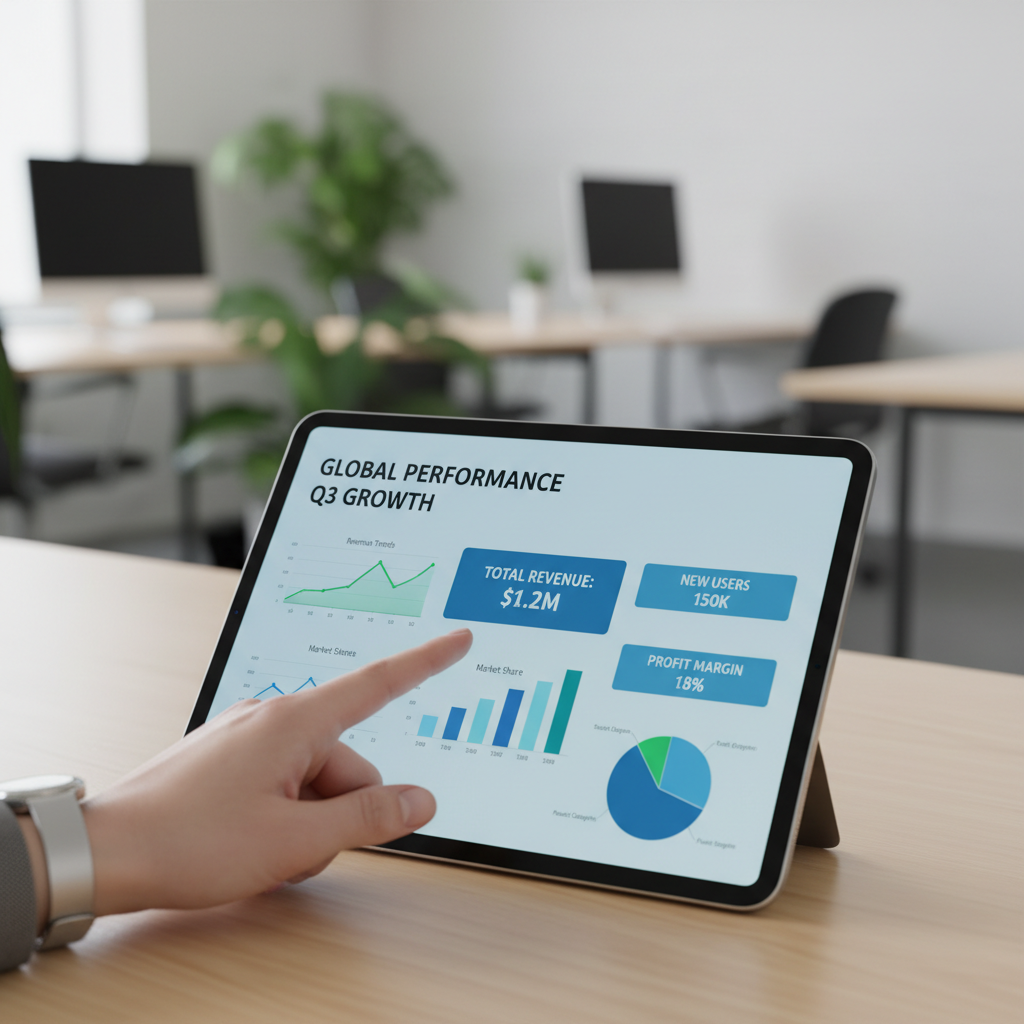
Once you categorize IT functions into tactical plumbing and strategic architecture, the next logical step is financial benchmarking. Budgeting for IT outsourcing for small business requires moving away from the cost per repair mindset and toward a predictable monthly expenditure. On average, standard managed services range from $75 to $250 per user per month. This baseline typically covers help desk support, security patches, and basic cloud management.
Service Level | Monthly Cost Per User | Typical Features |
|---|---|---|
Standard Support | $75 to $150 | Remote help desk, antivirus, patch management, business hour support. |
Comprehensive Managed IT | $150 to $250 | 24/7 monitoring, backup management, on-site support, basic security. |
High-Compliance/Security | $250 to $400+ | Regulatory compliance (HIPAA, CMMC), advanced threat detection, dedicated vCISO. |
Several variables dictate where your firm falls within these ranges. The most significant driver is the complexity of your environment. A firm operating entirely in a modern SaaS cloud environment often faces lower management costs than one maintaining legacy on-premise servers. Furthermore, if your industry requires strict data sovereignty or high-level security protocols, expect to pay a premium for the specialized audits and tools involved.
Other factors include the total device count per user and your requirement for round the clock availability. If your team only needs support during Mountain Time business hours, your costs will stay on the lower end of the spectrum. When you optimize your modern operations, the goal is to align these costs with the actual risk and performance needs of the business, ensuring you are paying for reliability rather than just a standby technician.
When to Hire an IT Person vs Outsource to an MSP
Determining the right moment to transition from a solo owner-operator approach to formal technical support depends heavily on your headcount. For organizations with fewer than 10 employees, a full-time IT hire is almost never fiscally responsible. The salary and benefits for a qualified specialist far exceed the cost of professional managed services, and the workload for such a small team rarely fills a 40-hour week. At this stage, total reliance on external expertise is the most efficient way to access strategic planning and digital tools without the overhead of an internal department.
The 10 to 50 employee range represents a transition phase where technical requirements become more frequent but still do not justify a dedicated department. As a firm grows, a hybrid model often emerges as the most effective strategy. This approach utilizes the 70/30 rule for operational efficiency. Under this framework, 70% of your IT needs, which include standardized functions like network security, hardware procurement, and cloud hosting, are managed by an external partner. The remaining 30% consists of the high-touch, proprietary processes and specialized software workflows that define your specific business model.
Once a company exceeds 50 employees, technical complexity usually necessitates a dedicated internal lead. This person is not necessarily there to reset passwords or patch servers; rather, they serve as a strategic liaison who ensures that the external partner’s output aligns with company goals. They manage the relationship, oversee data governance, and work to optimize your modern operations.
Headcount | Recommended IT Model | Primary Focus |
|---|---|---|
1 - 10 | Fully Outsourced | Cost control and baseline stability. |
11 - 50 | Hybrid Model | Scaling technology driven business solutions while standardizing infrastructure. |
51+ | Internal Lead + MSP | Strategic alignment, vendor management, and complex workflow integration. |
By following this headcount-based framework, leadership avoids the common mistake of hiring a technical specialist too early and stalling growth with unnecessary payroll. Instead, IT outsourcing for small business should evolve alongside your team size, shifting from a utility purchase to a collaborative partnership that scales with your revenue.
Beyond the Basics: IT Outsourcing in the Age of AI and Modern SaaS

The definition of IT outsourcing for small business is undergoing a fundamental shift. In the past, support focused primarily on physical infrastructure, server rooms, and hardware maintenance. Today, with the proliferation of AI agents and interconnected SaaS platforms, the physical hardware is often the least complex part of the technical stack. A modern partner should provide more than reactive support; they must facilitate deep software integration and workflow automation.
At Allivhu, we believe technology driven business solutions should move beyond the functioning keyboard metric. When you optimize your modern operations, the focus shifts to how your CRM, accounting software, and communication tools share information. AI is no longer a futuristic concept but a practical tool for automating data entry, summarizing client interactions, and predictive scheduling. If an outsourced partner is only maintaining your internet connection without helping you leverage these tools, they are not protecting your growth.
Effective outsourcing now centers on building a tech stack that generates clean data for strategic planning and digital tools. The objective is to create a unified digital environment where information flows between departments without manual intervention. This allows leadership to make decisions based on real time visibility rather than outdated, manual spreadsheets. By prioritizing software integration over simple repair, businesses create a foundation that grows naturally as market demands evolve. This shift transforms IT from a necessary expense into a engine for operational intelligence.
A Checklist for Evaluating Outsourced IT Providers
Selecting a partner for IT outsourcing for small business goes beyond vetting their ability to fix a server. To truly move the needle, look for a provider that prioritizes your operational strategy over simple ticket resolution. Use the following criteria to evaluate whether a partner can provide technology driven business solutions or just basic troubleshooting.
Proactive Monitoring: A high-level provider identifies and resolves resource bottlenecks or security vulnerabilities before your team notices an issue, moving away from a costly break, fix cycle.
Documented Recovery Objectives: Ensure they provide clear Recovery Time Objectives (RTO). Knowing data is backed up is insufficient; you must know exactly how many hours it takes to be fully operational after a failure.
Security Maturity: Look for providers that manage advanced security protocols like endpoint detection, multi-factor authentication, and regular compliance auditing as a standard part of their stack.
Local Expertise: Having a partner with a presence in Duchesne, UT, provides a nuanced understanding of regional infrastructure. This allows for on-site strategic planning and digital tools sessions that remote-only call centers cannot match.
Ultimately, the goal is to optimize your modern operations by ensuring technology serves your long-term business goals rather than creating new administrative burdens. A provider should be measured by how much they increase your operational visibility, not just by how quickly they answer the phone.
Feature | Reactive Support | Operational Strategy Partner |
|---|---|---|
Support Style | Break-Fix (Responsive) | Proactive Monitoring (Predictive) |
Data Safety | Periodic Backups | Verified RTO/RPO Recovery Targets |
Security | Basic Antivirus | Comprehensive Threat Management |
Strategic Input | Hardware Specs | Workflow and Software Integration |
Choosing the right balance between internal oversight and external expertise is the key to sustainable growth. By applying a neutral framework, you can protect your core operations while leveraging specialized support where it matters most. If you want expert help refining your IT strategy or implementing these changes, you can explore our Services to learn how we support growing businesses. We are ready to help you navigate these decisions whenever you need a partner.