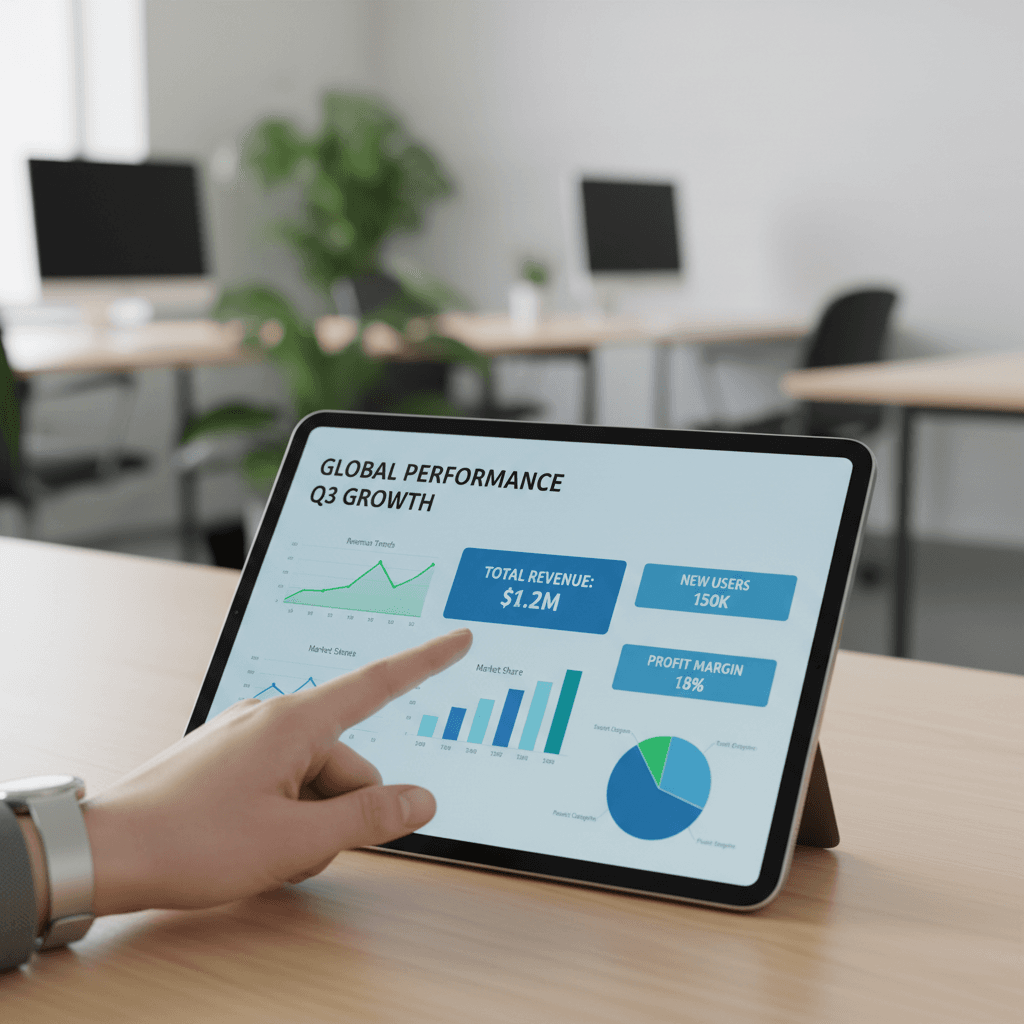
Operational visibility for small business is achieved by tracking key performance indicators such as cash flow, process efficiency, and customer satisfaction through a centralized dashboard. Solopreneurs can build a lightweight system by using a small business operational plan template to automate data collection and eliminate information silos. This streamlined approach provides real time insights into business health and growth without the need for complex enterprise software.
Most solopreneurs manage their daily tasks through a haze of intuition and reactive decision-making. You might feel like you are working hard, but you cannot pinpoint exactly where your time or capital is leaking. This visibility gap creates a ceiling for your growth; it transforms your business into a black box where inputs do not always yield predictable results. To scale effectively without burning out, you need a clear window into your operations. In this guide, we will define how a one-person team can achieve professional-grade visibility without the administrative bloat of a corporate enterprise. You will learn to identify the four essential pillars of a solopreneur scorecard, avoid the common pitfalls of dashboard fatigue, and build a streamlined roadmap to move from manual tracking to a modern, integrated operations system.
The Visibility Gap: Are You Running Your Business Blind?
Operational visibility for small business is frequently misunderstood as a luxury reserved for large corporations with dedicated data analysts. For a solopreneur, however, visibility is the difference between steering a ship and simply drifting. It represents a unified understanding of how your time, money, and effort translate into growth. Without it, you are likely operating within a visibility gap where critical information is trapped in separate digital containers.
Most solo owners suffer from the siloed software problem. You might check QuickBooks for your bank balance, a project management tool for deadlines, and a CRM for leads, but these tools rarely communicate. When data stays isolated, you cannot see the ripple effects of a delayed project on next month's cash flow. This fragmentation leads to common warning signs: making major investment decisions based on a gut feeling, feeling blindsided by a low bank balance despite high sales, or realizing a project timeline has slipped only after a client complains.
True visibility does not require a complex dashboard with 170 KPIs. For a business here in Duchesne or operating remotely, it is about creating a clear line of sight across your modern operations. By moving away from reactive habits and toward strategic planning, you replace uncertainty with actionable insights. If you find yourself guessing more than knowing, it may be time to contact Allivhu LLC to bridge that gap. Visibility is about clarity; it is the essential foundation that allows a one person team to scale without burning out.
Defining Lightweight Operational Visibility for a 1 Person Team
For a one person team, operational visibility is often mistaken for the complex Business Intelligence (BI) systems used by large corporations. Enterprise BI requires data analysts and massive software stacks to monitor hundreds of metrics. A solopreneur attempting to track 170 different KPIs will quickly succumb to administrative fatigue. Instead, effective operational visibility for small business relies on a lightweight approach.
What is visibility in business? In a solo context, it is the capacity to see the direct link between daily tactical actions and long term financial health. It means knowing that spending four hours on a specific administrative task today directly reduces your capacity for high value client work next week. This is not about data for the sake of data; it is about minimum viable data.
By focusing only on the metrics that influence immediate decisions, you create a system that is sustainable and informative. This streamlined approach allows you to engage in strategic planning without getting bogged down in spreadsheets. You only need enough information to answer three questions: Is my cash flow stable? Are my clients happy? Is my time being used efficiently? If a metric does not help you answer these or adjust your modern operations, it is likely noise that should be ignored.
The Solopreneur Scorecard: Four Essential Pillars to Track

Building a lightweight system requires a specific framework to filter the noise. The Solopreneur Scorecard adapts the traditional Balanced Scorecard into four practical pillars. This framework provides comprehensive operational visibility for small business owners without requiring a full time analyst or complex software.
Financial Health: Move beyond net profit to track cash flow. While profit tells you if you are making money on paper, cash flow tells you if you can pay your bills today. For a solo owner, this means tracking the gap between invoicing and payment receipt. If your strategic planning does not account for payment delays, you risk a liquidity crisis despite having a profitable year. Knowing your cash runway is the most basic form of visibility.
Client Success: Without a customer support department, success is measured by retention and referrals. Track how many clients return for a second project or sign a recurring retainer. High turnover is a leading indicator of process friction or misaligned expectations. Both of these issues will eventually hinder long term growth if they are not identified early through consistent tracking.
Process Efficiency: This is where most solo owners lose their margin. Since you are the primary labor source, your time is the business's most expensive asset. Instead of complex management reporting, perform a monthly time tracking audit. Compare the time estimated for a project against the time actually logged in your management tools. If a two thousand dollar project takes forty hours instead of the planned twenty, your effective hourly rate has been cut in half. Identifying these leaks is critical for modern operations.
Pipeline Growth: Visibility must look forward, not just backward. Track the number of new inquiries and their source to prevent the feast or famine cycle common in solo ventures. If you know that four leads typically result in one closed contract, you can predict your revenue three months in advance based on today's activity.
This scorecard ensures you are not just working in your business, but managing it. By documenting these four pillars, you create a baseline for future growth. If these metrics reveal bottlenecks you cannot solve alone, you can contact Allivhu LLC to help build the systems necessary to reclaim your time.
How to Build Your Visibility System: A Step by Step Roadmap

Building a system for operational visibility for small business does not require an immediate investment in expensive dashboard software. Jumping straight to automation often obscures the very insights you are trying to find. A manual first approach is essential; by physically moving data from its source to a central record, you force yourself to confront the numbers and understand the mechanics of your modern operations.
Audit your current data silos. Most solopreneurs already possess the data they need; it is simply scattered. Review your accounting software like QuickBooks for financial data, your CRM or project management tool for client progress, and your calendar for time allocation. List every digital or physical location where business activity is recorded to identify where your information currently lives.
Select three to five North Star metrics. Avoid the temptation to track every possible data point listed in enterprise templates. Using the pillars from the Solopreneur Scorecard, choose one metric for each category that serves as a high level health indicator. For example, your financial North Star might be your cash runway, while your efficiency metric might be your average billable hour realization rate. These few numbers should provide a pulse check on the entire business.
Establish a centralized collection point. For a one person team, a simple Google Sheet, a Notion database, or a structured template is often more effective than complex software. Dedicate ten minutes every Friday to update this single source of truth. This habit ensures your strategic planning is based on current reality rather than fragmented memory.
As your business grows, the manual effort required to maintain this system will eventually become a bottleneck. This is where Allivhu LLC provides the most value. We help organizations bridge the gap from manual tracking to technology enabled systems that integrate these silos. If you find your manual system is becoming a chore, you can contact Allivhu LLC to help automate your data flow. This transition ensures that as you scale, your visibility remains clear, consistent, and actionable.
Common Data Pitfalls: Avoiding Dashboard Fatigue
Building a roadmap is only effective if you can maintain it without it becoming a second job. Most attempts at operational visibility for small business fail because the owner over-engineers the solution. If you find yourself spending hours troubleshooting a complex dashboard or manually entering data into several different spreadsheets, you have created a burden, not a tool. Sophisticated software often promises automated insights but frequently requires significant technical configuration that a solo owner cannot spare the time to manage.
To keep your strategic planning sustainable, apply the 5 Minute Rule: if your visibility system takes more than five minutes a week to update and review, it is too heavy for your current stage. This constraint forces you to focus on high-impact data rather than a list of 170 metrics that do not drive immediate action.
A common point of confusion that leads to dashboard fatigue is the difference between a target and a KPI. A Key Performance Indicator (KPI) is a metric that tells you how your business is currently performing, such as your average project turnaround time. A target is the specific goal you want that KPI to reach, such as "under 10 days." Conflating the two leads to frustration; you must first see your actual data before you can set a realistic benchmark. If your manual tracking becomes a recurring friction point, you can contact Allivhu LLC to refine your modern operations and ensure your system remains lightweight.
Integrating Tools: Moving From Manual to Modern Operations

Once your manual tracking habit is solid, you can begin to bridge the gap between your siloed applications. The objective is to transition from manual data entry to a system of modern operations where data flows automatically from your CRM or calendar into your master scorecard. For most solopreneurs, this does not require hiring a full stack developer. Platforms like Zapier or Make allow you to create simple logic bridges; for example, every time a QuickBooks invoice is marked as paid, a row can be automatically updated in your tracking spreadsheet.
This automation is only possible once you have established clear operational visibility for small business. You cannot effectively automate a process you do not understand or cannot see. By first identifying your North Star metrics manually, you define the logic that the software needs to follow. This transition is the tipping point where you stop looking backward at what happened and start using data for proactive strategic planning.
Automation should solve a specific friction point, not just add another layer of tech to manage. If you are tracking project hours, a simple integration between your time tracker and your project management tool can reveal real time margin leaks. If the technical setup feels overwhelming or if you are struggling to sync disparate tools, you can contact Allivhu LLC to help implement these technology enabled services. A strong foundation of visibility ensures that when you choose to scale, your systems are built to support growth rather than collapse under increased complexity.